Why Spaces Like Jambo Matter for Accra’s Creative Economy
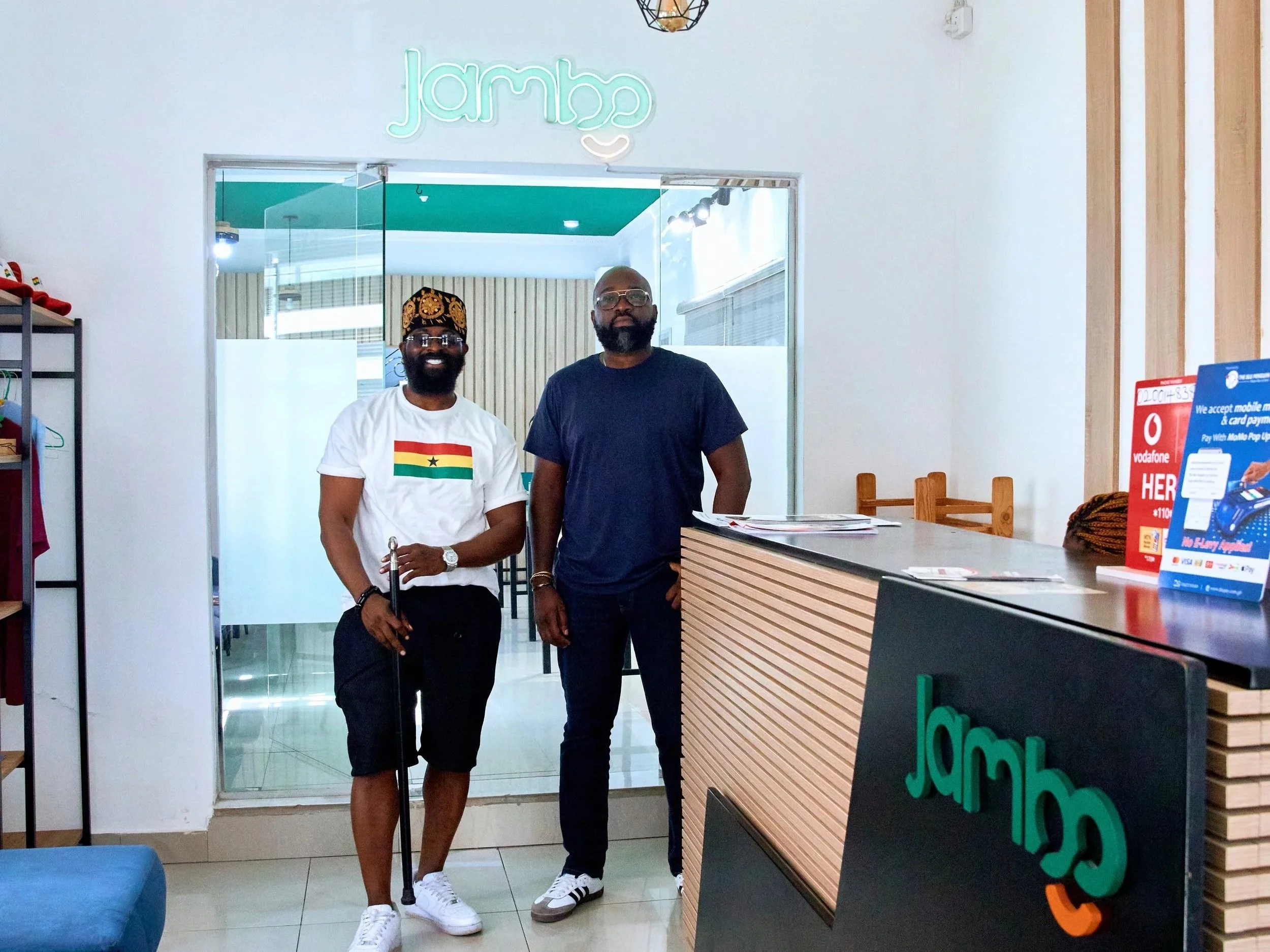
Before the Diaspora Roundtables, I spent some time at Jambo Spaces, walking the space with Bernard Kafui Sokpe, its founder and CEO.
He showed me how the different rooms are used day to day: podcast booths in constant rotation, the music studio booked by emerging artists, shared work areas doubling as meeting points and event spaces. People weren’t passing through; they were working.
The space is thoughtfully designed, well equipped, and genuinely welcoming. It’s built to support people doing real work.
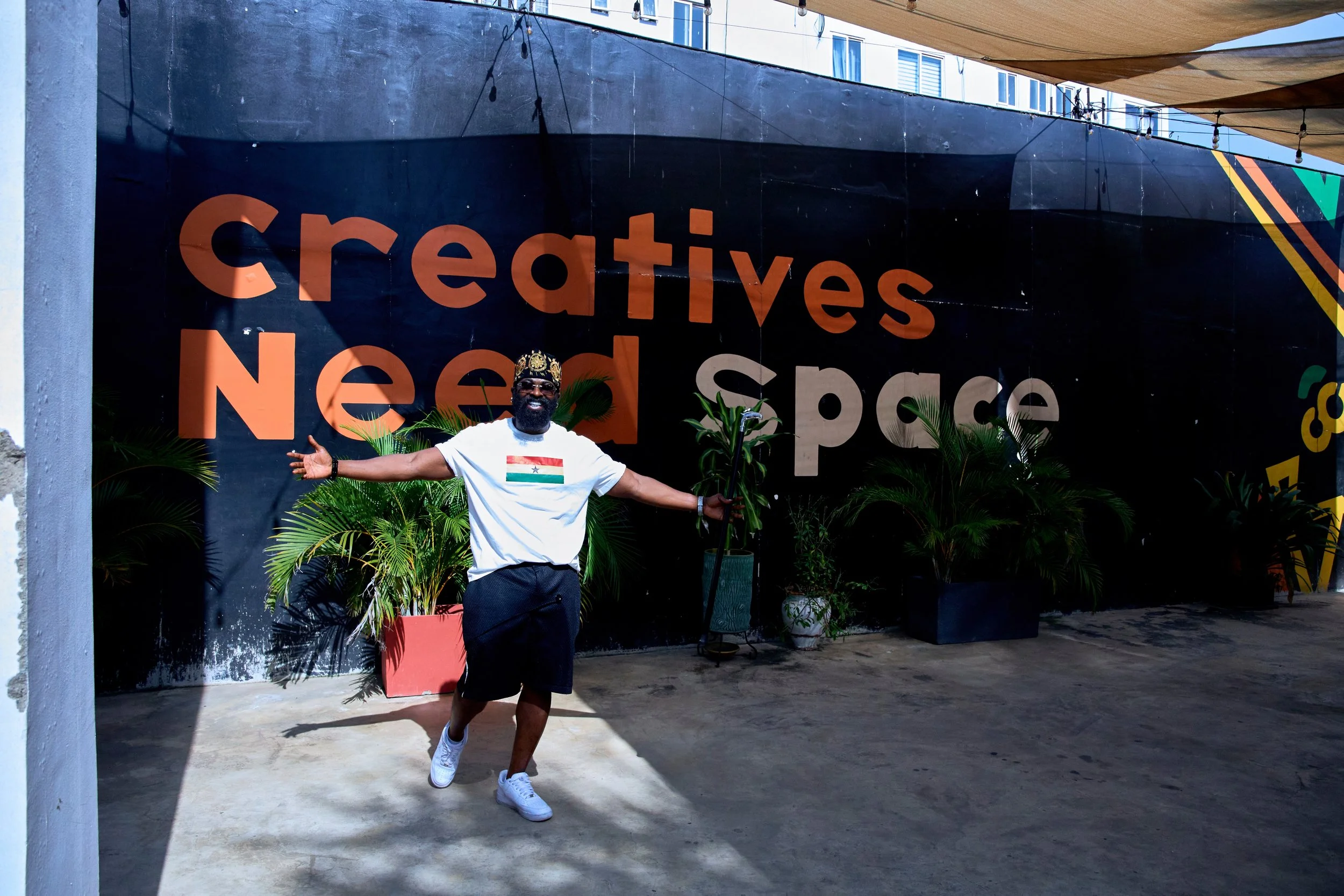
Jambo Spaces exists because access, and who controls that access, shapes who gets to build sustainably.
For many African creatives, the challenge has never been talent or ambition. It has been the absence of spaces owned and governed by Africans, and designed with local creative realities in mind. When creative infrastructure is temporary, externally controlled, or extractive, work becomes fragile. It depends on permission. It peaks, then disappears.
Bernard spoke openly about this gap and about why Jambo was built as a locally owned, permanent institution that creatives can use, rent, and return to. The approach is practical rather than symbolic. The focus is on reducing friction so work can happen consistently. Reliable internet. Stable power. Affordable equipment. Rooms that are genuinely available. Pricing that reflects where people are, not where an external market expects them to be.
Jambo is also a clear example of something we often miss in conversations about Africa’s creative future. The solutions are already here. The talent is already here. What is missing is not saving, rescuing, or reinvention, but infrastructure. When that infrastructure exists, even at a modest scale, everything else accelerates. When it doesn’t, progress becomes harder than it needs to be.
That reality matters for Accra’s creative economy. Spaces like Jambo allow value to circulate locally. Skills are developed here. Projects are produced here. Income is earned here. Creatives do not simply pass through the city; they build within it. Over time, that strengthens capability, confidence, and continuity across the ecosystem.
You feel this thinking in the atmosphere of the space. It does not rush people toward outcomes. It supports process. It allows people to begin, return, and build something durable. This is how creative economies move from moments into systems.
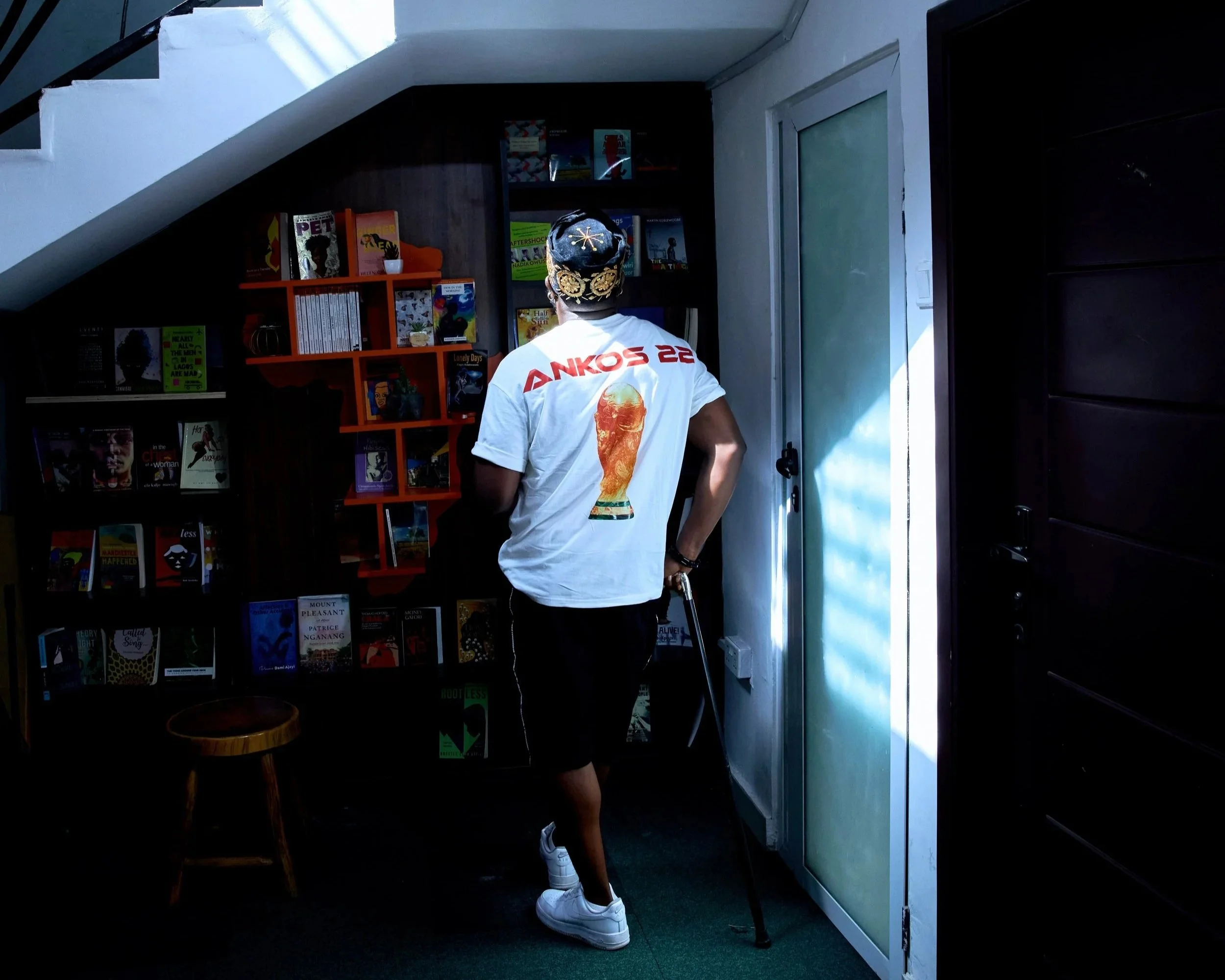
The word Jambo means hello. A greeting. A welcome. A way into conversation.
Bernard explained that every meaningful relationship starts there, and that idea runs through everything they have built. People arrive as strangers and leave knowing someone. Collaborations start casually. Ideas are shared without pressure. Throughout this trip, that spirit of openness has been a recurring lesson.
It reminded me how much creative work depends on environment, on whether people feel comfortable enough to try, fail, and try again.
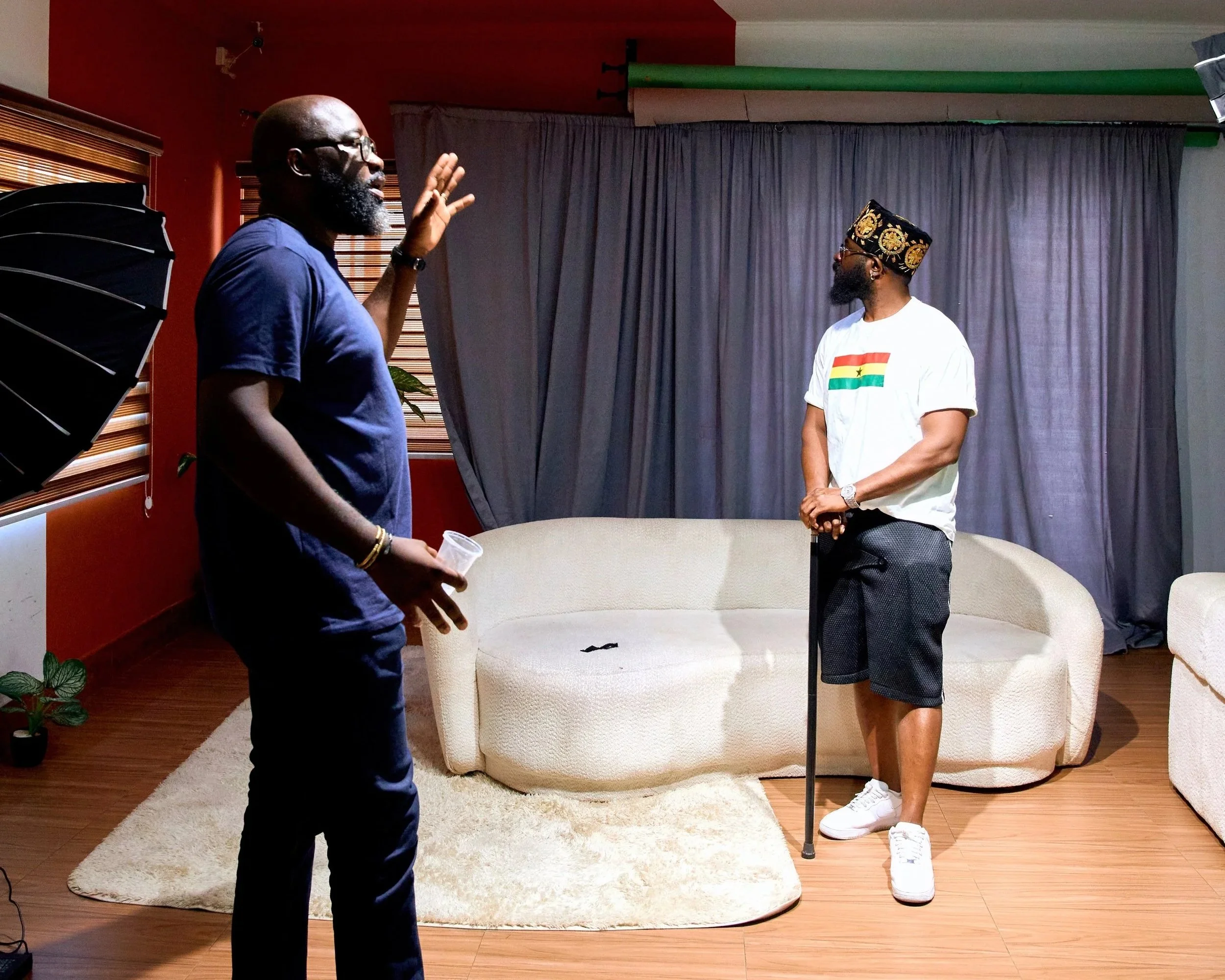
As we prepared for the Diaspora Roundtables, I found myself thinking about what actually sustains creative economies beyond moments and seasons.
Spaces like Jambo are part of that foundation. They give people somewhere to return to, somewhere to learn, and somewhere to grow at a steady pace, not only during peak periods. They allow creativity to become work, and work to become livelihood, within the city that holds it.
I left with a clearer sense of what permanence makes possible, and why spaces like this matter long after the conversation moves on.
Dr. King SMADE
Journal Entry
Accra, December
