The GTBank Concert, Accra — Scale, Sound, Safety, and the Infrastructure Questions We Need to Answer
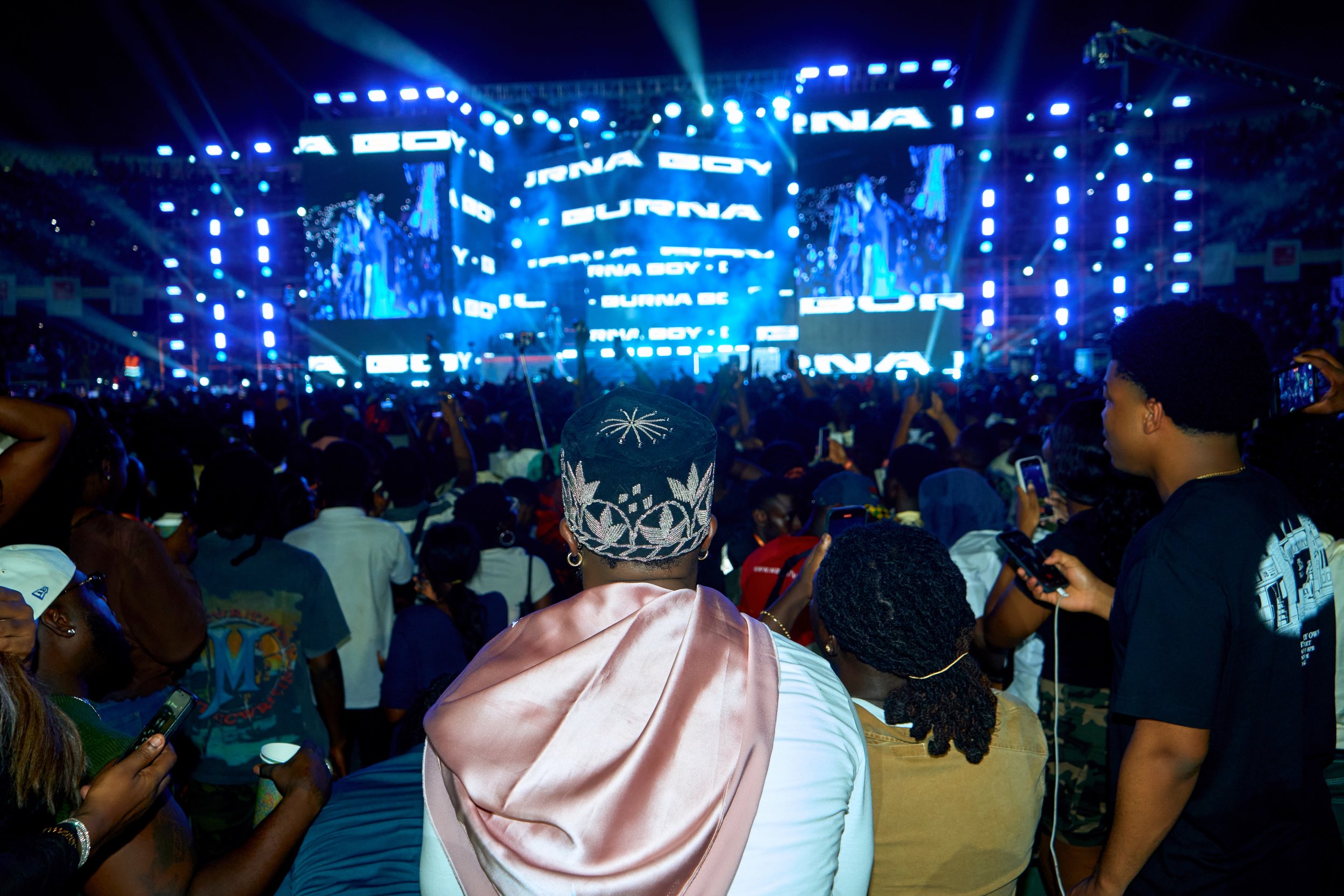
Accra is a city under sustained growth.
With an estimated 5.4 million residents, it is one of Africa’s fastest-growing urban centres, shaped by population influx, diaspora return, and increasing cultural gravity. In December, that growth becomes concentrated. Tourism spikes, events stack, and large audiences move through the city simultaneously. The pressure on infrastructure is real and measurable.
It was within this context that I attended the Guaranty Trust Bank concert at Accra Sports Stadium — a venue operating at its 40,000-person capacity.
The full lineup was broad, deliberate, and reflective of where Accra sits today as a regional cultural hub:
Sarkodie
Shatta Wale
Burna Boy
R2Bees
Ayra Starr
Patoranking
King Promise
Joeboy
FireboyDML
What worked about this lineup was its range and coverage. Ghanaian artists with deep domestic reach sat alongside continental acts with established touring histories. Different sounds, different generations, different audience segments — all sharing one stage. It reflected Accra not as a single-market city, but as a meeting point for regional culture.
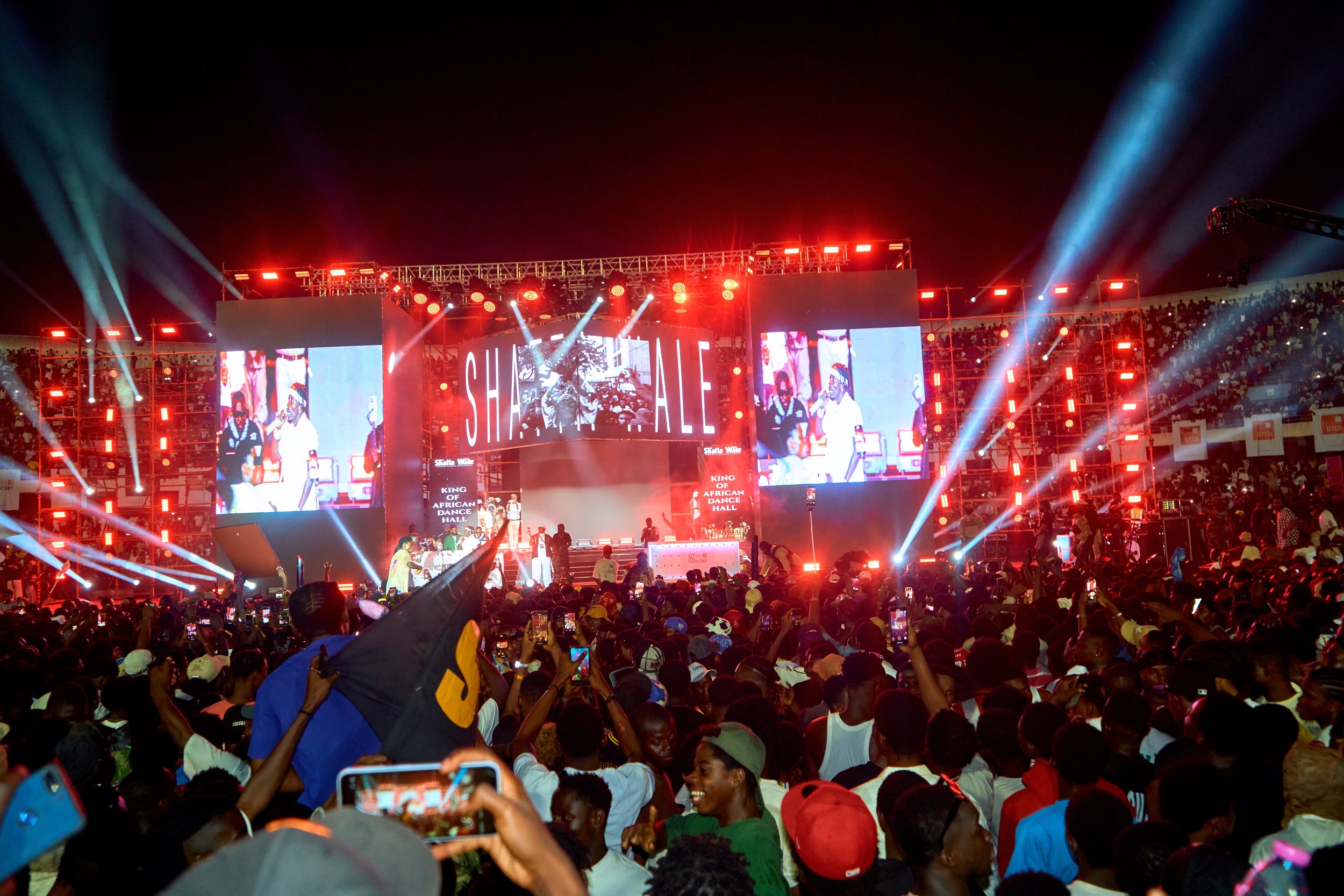
When Shatta Wale came on stage, the shift in crowd behaviour was immediate. You could feel the relationship in real time. The crowd moved together, not because they were told to, but because they already understood the moment.
Commanding a stadium at home is not about digital metrics or chart placement. It is trust density. Tens of thousands of people responding instinctively because the relationship already exists. That kind of command is built over years through consistency, visibility, and proximity to the audience. It is also leadership. When an artist holds that level of influence, they are shaping energy, movement, and responsibility in the room.
Shatta Wale is already a global icon without leaving Ghana. His music travels. His name travels. His influence travels. The question is not whether the world would receive him. The question is whether the structures exist to carry him properly, and whether the world needs him more than he needs the world.
That distinction matters.
We often frame global success as physical movement, but scale is not only about geography. It is about systems. Taking an artist on the road at scale requires alignment across multiple layers. International promoters with leverage. Upfront capital to underwrite risk. Visa and routing processes that do not stall momentum. Venues that can handle both sound and crowd behaviour. Insurance. Safety standards that hold under scrutiny across different markets.
This is where the comparison people quietly make comes into focus. What separates someone like Shatta Wale from a Burna Boy is not talent, audience, or cultural weight. It is infrastructure. It is promoter belief at the right moments. It is early touring pathways that compound over time. It is systems that convert demand into repeatable global presence.
We talk about capacity as if it is abstract. It is not. Capacity is people. Promoters. Artists. Investors. Audiences. When those parts align, scale becomes sustainable. When they do not, star power remains geographically concentrated, not because it lacks value, but because the surrounding infrastructure has not yet caught up.
A stadium moment in Accra proves demand. A global touring run tests whether the infrastructure can move with it.
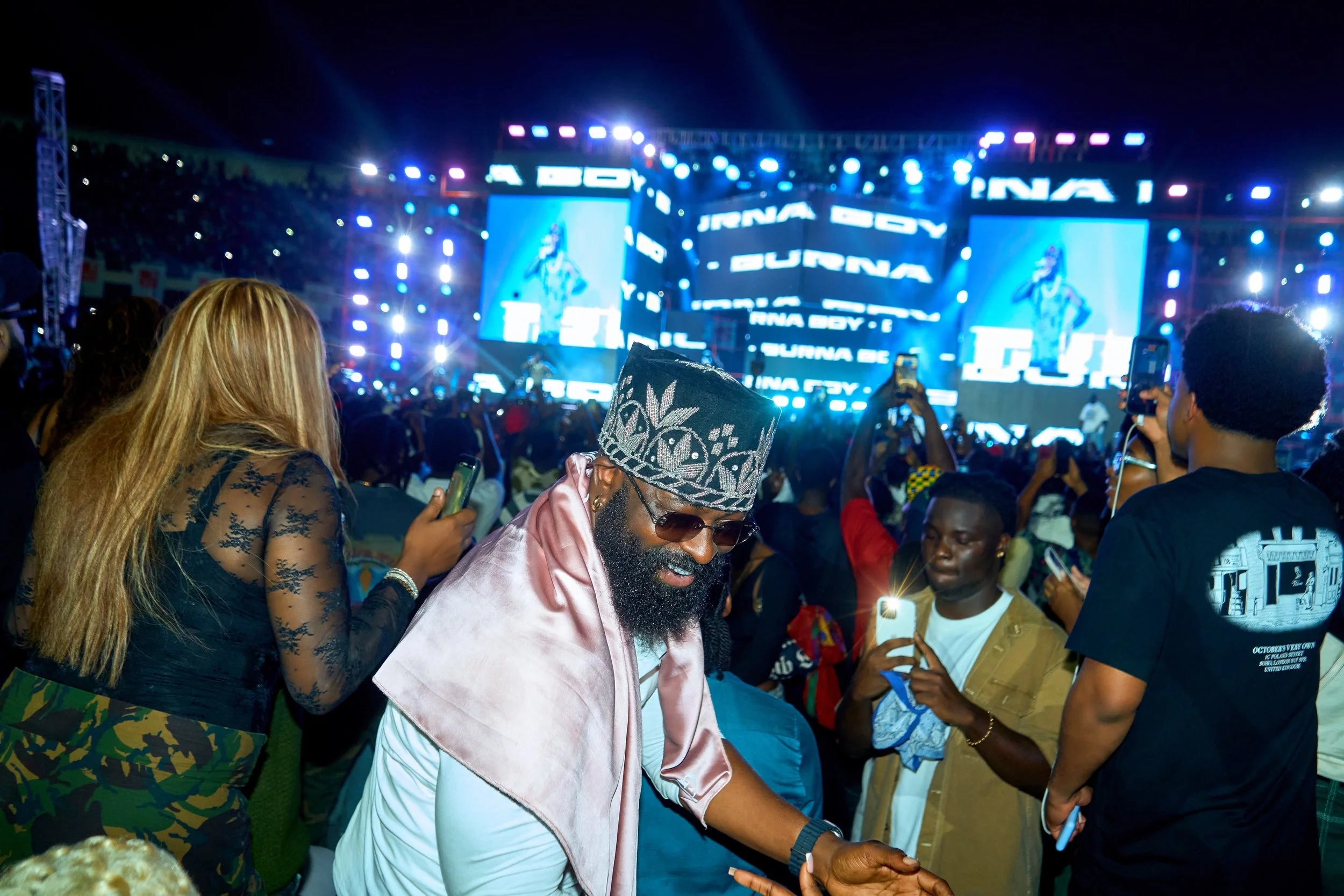
One moment during the night illustrated this clearly. King Promise experienced noticeable sound issues during his set.
This wasn’t about performance. It was about environment.
Accra Sports Stadium is not a bespoke music venue.
While it can hold large numbers, it was not designed primarily for live music acoustics, stage depth, sound dispersion, or consistent technical delivery across acts.
This raises a fair question:
If Accra can repeatedly fill 40,000-capacity spaces, why does it not yet have a purpose-built music venue at comparable scale?
A city of this size, hosting multiple large concerts every year, needs venues designed specifically for music — spaces that prioritise sound, sightlines, rigging, crowd flow, and technical consistency. Repurposing sports infrastructure works in the short term, but it introduces compromises that affect both artist performance and audience experience.
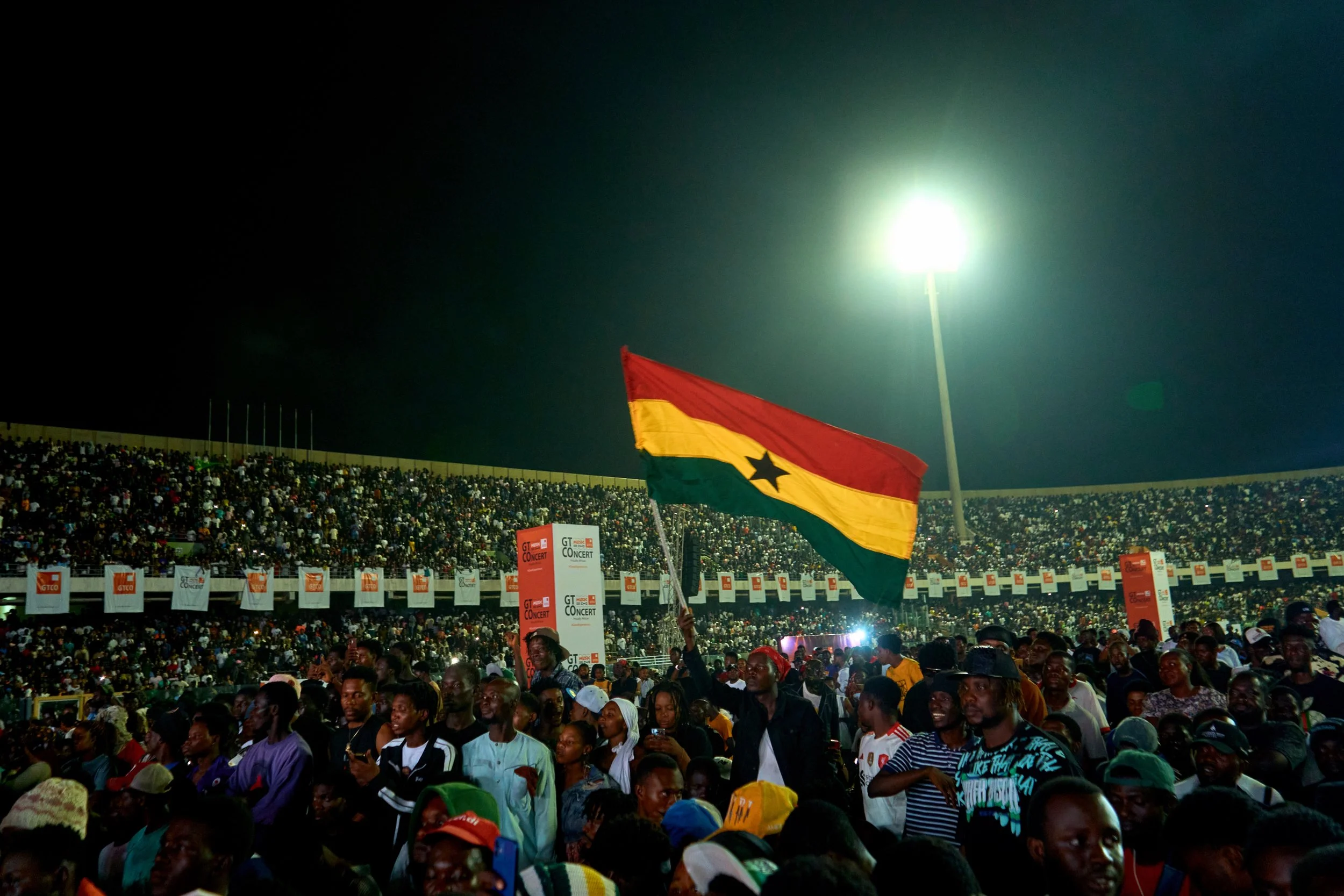
Scale increases responsibility: safety is not optional
Large audiences increase responsibility proportionally.
December in Ghana is operating at full intensity. Major shows are happening every day, often overlapping, often competing for the same audiences, infrastructure, and personnel. The pace is relentless. I have barely slept since arriving because of how much is happening across the city. In that environment, crowd control cannot be treated as a secondary concern. It is central to everything.
Safety is not the responsibility of one party. It sits across the entire ecosystem. Artists. Promoters. Security teams. Policy makers. Government agencies. Everyone has a role to play. No amount of money is worth a life.
This is also why domestic dominance does not automatically translate into global touring success. Demand alone is not enough. The missing piece is structure.
This festive season alone, crowd incidents and festival stampedes have occurred in multiple countries, including Kenya. These events reinforce a pattern we have seen globally in recent years. When scale moves faster than planning, safety failures follow.
These incidents are not anomalies. They are predictable outcomes of high-density crowds, compressed event schedules, inadequate crowd-flow design, and operational decisions made under extreme time pressure.
In cities like Accra, where December concentrates population movement, tourism, and major programming into a short window, the risk profile increases significantly. The city is absorbing more people, more events, and more pressure than it was originally designed for.
Effective crowd safety at scale requires deliberate systems. Structured entry and exit routes that prevent bottlenecks. Zoning and barrier layouts informed by real crowd behaviour, not assumptions. Clear coordination between promoters, security teams, artists, emergency services, and local authorities. Operational standards that are enforced consistently, regardless of commercial urgency or scheduling pressure.
Safety cannot sit at the margins of production planning. It must be treated as a core strategic function, equal in importance to programming, sponsorship, and marketing. When audiences reach tens of thousands, small operational gaps compound quickly, and the consequences are irreversible.
Scale is not just about growth. It is about responsibility.
What the GTBank concert ultimately shows
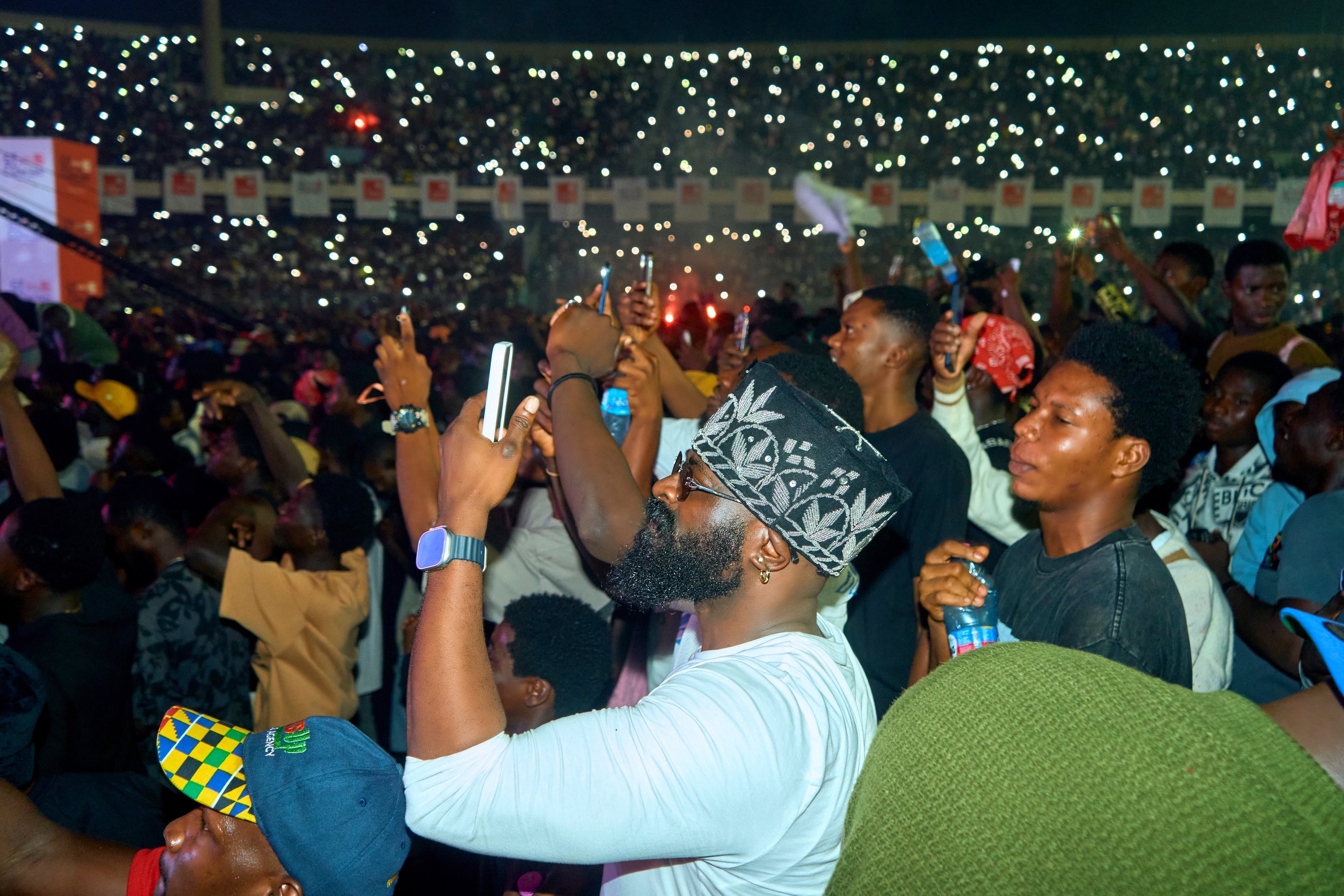
It is also important to note that the GTBank concert was a free show. That context matters.
A free event at stadium scale significantly increases both access and risk. When tens of thousands of people can enter without financial friction, crowd behaviour shifts, arrival patterns compress, and pressure on entry points, exits, and security systems intensifies. Managing that responsibly requires serious planning and resourcing.
The GTBank concert demonstrated what becomes possible when a financial institution engages with culture as infrastructure, not as spectacle. Proper backing enables staffing, security, technical delivery, emergency readiness, and operational coordination at a level that scale demands. It allows safety to be designed into the experience, not patched on around it.
Accra has already proven it can gather the people. Repeatedly. At volume.
The next phase is ensuring that venues, safety systems, and touring infrastructure evolve at the same pace as demand. That includes thinking seriously about purpose-built music venues, crowd-flow design, and standards that hold whether an event is ticketed or free.
That is how domestic command becomes sustainable growth.
That is how star power travels.
And that is how a rapidly growing cultural city protects its people while building a live music economy that lasts.
Dr. King SMADE
Journal Entry
Accra, December
